

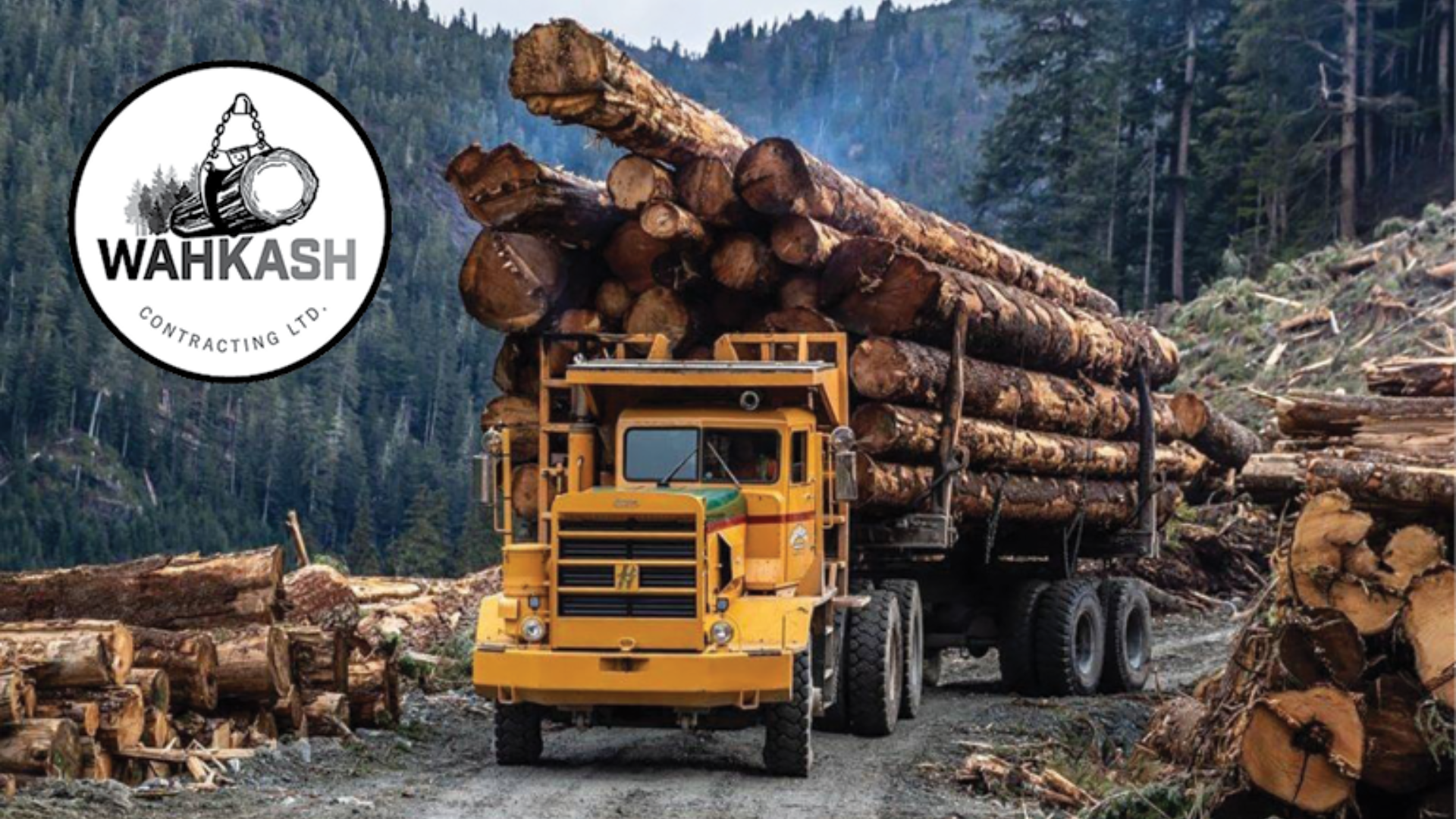
Dorian Uzzell, the owner of B.C. logging operation Wahkash Contracting, was an instrumental part of the building of the first diesel-electric hybrid grapple yarder by T-Mar Industries—he’s the customer for the yarder.
“We are definitely excited about the hybrid yarder,” says Uzzell. “There is some anxiousness about how it will perform—we’ve invested a lot in it—but I’m very confident it will perform very well.”
Over the last several years, Uzzell and the Wahkash crew have been able to monitor the progress of building the yarder, and provide feedback to T-Mar. That part of it is pretty easy, considering T-Mar is down the street from the Wahkash shop, in Campbell River, on Vancouver Island.
“We could run up there and look at how things were going with Tyson and the T-Mar team,” Uzzell explained.
There was feedback on everything from powering the machine, to the everyday features. “When they were configuring the new operator’s cab, we’d be able to have our operators sit in the seat and give them feedback.”
This past summer, before it went out to the bush, operators from Wahkash had the opportunity to try out the fully-built rebuilt 7280 hybrid yarder at the T-Mar yard. This involved installing thousands of feet of heavy cable on the yarder’s drums, which is a process in itself, but it was well worth the effort, as the comments were positive on the machine’s performance.
Uzzell sees the hybrid yarder as both part of an overall forest industry initiative to be better stewards of the land, and be more efficient and competitive. The move to a hybrid yarder was supported by Mosaic Forest Management, which manages the forest planning and operations for TimberWest and Island Timberlands on Vancouver Island. Wahkash does most of its logging for Mosaic. Mosaic has fully electric pick-up trucks as part of its fleet, and has looked into all-electric logging trucks.
Uzzell explained that Wahkash was looking at rebuilding one of its 7280 grapple yarders at a cost range from $1 million to $1.4 million. They rebuild their yarders every 10 to 12 years. “Tyson from T-Mar was proposing the hybrid machine at the time, so it aligned with what we had planned, and with about a $1.3 million budget.”
Like anyone who is investing in new technology, Uzzell said there is some natural anxiety about how the new hybrid yarder will perform—especially as they are looking for it to function better, and more efficiently, than a conventional yarder.
And for operators who are used to the older yarders, there are changes.
“The process that you are going to use to grab the logs out of the forest is going to be very, very different with the hybrid yarder,” explains Uzzell. “We’ve always used foot and hand controls, essentially using friction and braking, to control where the grapple drops, to grab logs.”
This combination of hand controls and foot controls is something that experienced operators know and do very well—but it took many, many operating hours to get to that level of proficiency. Those experienced operators can be hard to find these days.
“That is now going to be controlled by a computer program that directs what your hands are going to do on the controls,” says Uzzell. “It will make the grapple yarder way easier to operate, and it will make it easier to train younger people on the machine.”
It’s important, he says, to be able to train the next generation of machine operators more easily on an advanced piece of equipment—Uzzell believes that operating a cutting-edge piece of equipment will appeal to younger people, and, in turn, help continue to maintain his crews.
And, says Uzzell, the hybrid machine packs more punch. “It has more torque and pulling power, and speed and precision, than any machine we’ve ever had.”
Any productivity gains would be a bonus, though, he says.
“I’m not counting on that from the machine. The functions of a yarder are pretty straightforward. You can only realistically yard so much wood in a setting. Grapple yarders operate in steep ground, with big wood and they work hard to get the wood out of the pile and land it, because you are usually on the side of a mountain.” You can only move timber so fast, given that environment.
But there are still significant potential savings, he said.
“Conventional grapple yarders burn 400 litres of fuel a day, and we are looking to reduce that by 50 per cent with the new hybrid machine.” Based on the cost of fuel, and the number of operating days, that alone could represent savings of $80,000 a year.
Longer term, they could also see savings on maintenance. The thinking is that the electric motors on the hybrid yarder would have a 25,000 operating hours’ life, vs. the 5,000-hour life of clutches and brakes in the older machines. “The electric motors are more expensive, but we still expect this could be a win for us,” says Uzzell.






0 Comments